

Description
:
Mount Lhotse Expedition, Lhotse Nepal
- Day 01: Arrival KTM & transfer to hotel -1300m/4264ft
Upon your arrival at Tribhuvan International Airport, our representative will welcome you and assist with your transfer to your hotel in Kathmandu. You may relax at your hotel or go around for shopping. In the evening, a welcome dinner will be organized for you in a centrally located Nepalese restaurant while you are briefed about your adventurous trip. Overnight at hotel. - Day 02: Kathmandu
This and the next day are spent in Kathmandu. Sightseeing and preparation for the expedition. While the leader attends a formal briefing at the Ministry of Tourism, you will explore the fascinating city of Kathmandu. You will visit the famous Boudhnath Stupa and the popular Hindu pilgrimage site, Pashupatinath Temple. In the late afternoon, the leader will check everyone’s equipment, as Kathmandu is the last opportunity to buy anything that is missing. You will also be introduced to your fellow expedition members and guides. Overnight at hotel. - Day 03: Kathmandu
One more day in Kathmandu. - Day 04: Kathmandu – Lukla – Phakding
This is the day the “Mount Lhotse Expedition, Lhotse Nepal” begins. Fly from Kathmandu to Lukla – 2,840 m/9,315 ft.
An early-morning scenic flight to Lukla. In Lukla, we meet our camp staff and porters and set off straightaway for our first night’s stop at Phakding. Situated on the banks of the Dudh Kosi, which drains the whole Khumbu region, Phakding sits on one of the area’s main trade routes and offers a number of clean, well-built lodges to spend the night. - Day 05: Phakding – Namche Bazaar
Trek to Namche Bazaar.
Continue up the banks of the Dudh Kosi, crossing it twice on small suspension bridges before reaching the village of Monjo, where we enter Khumbu National Park. Cross the confluence of the Dudh Kosi and the Bhote Kosi on a high suspension bridge and climb steeply for about two hours to reach Namche Bazaar – a prosperous trading town, capital of the Khumbu region, with genuine Tibetan artefacts. - Day 06: Namche Bazaar
We spend a day in Namche Bazaar resting and letting our bodies acclimatize to the altitude of 3,450 m (11,300 ft). - Day 07: Trek to Thyangboche
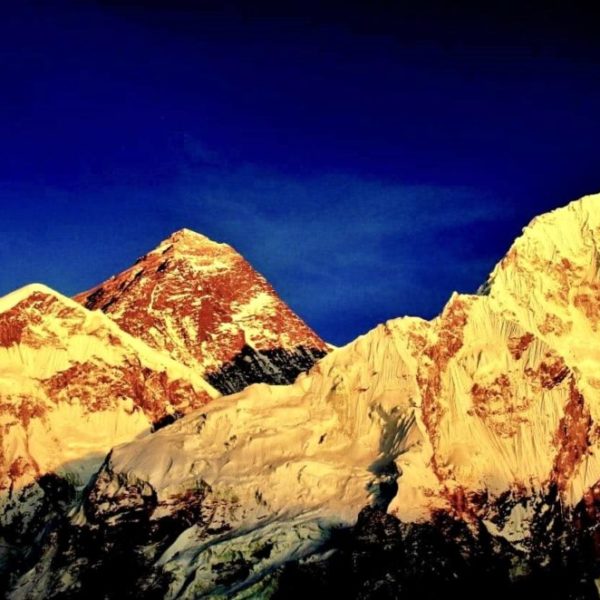
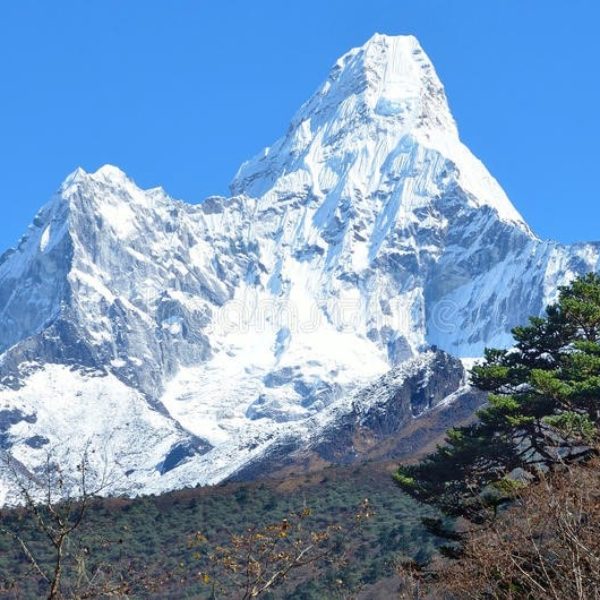
The well-worn Everest trail contours around the side of the valley high above the Dudh Kosi. Follow the path, savouring the first really good views of the great peaks of the Khumbu: Everest, Lhotse, Nuptse and Ama Dablam. Passing several villages and numerous tea shops, cross the Dudh Kosi river and make a steep climb to Thyangboche, home to an impressive, newly rebuilt monastery. - Day 08: Trek to Dingboche
Shaded by rhododendron trees, the path leads gradually back down to the river to another airy suspension bridge. An hour’s walk from here brings us to Pangboche, an excellent viewpoint for Ama Dablam. Contouring up the valley side, we re-cross the river and turn up the Imja Valley to reach the picturesque farming village of Dingboche. - Day 09-14: Acclimatization
This is an important phase of the expedition. Dingboche is a good location for acclimatization. The team leader will organize daily outings to the adjacent hills to allow gradual acclimatization. Walk some of the nearby hills to slowly increase your exposure to altitude, following the regime you have found most suitable, so you are maximally acclimatized before arriving at base camp.
While in Dingboche, we can attend a seminar on high-altitude acclimatization at a hospital run by the Rescue Association near Pheriche. The walk over to Pheriche and back also serves as good acclimatization training. - Day 14-40: Climbing / Expedition
This is the day the “Mount Lhotse Expedition, Lhotse Nepal” actually begins climbing. The next 27 days (including this one) are for climbing and the expedition itself.
Climbing period on Lhotse, then back to Base Camp. - Day 41-43: Base Camp – Dingboche – Thyangboche
Trek to Namche Bazaar via Dingboche and Thyangboche. - Day 44-45: Thyangboche – Phakding – Lukla
Trek to Phakding and Lukla. - Day 46: Lukla – Kathmandu
Fly from Lukla to Kathmandu.
We return to the hotel. Once back in Kathmandu, an evening barbecue is organized to celebrate the expedition and as a farewell to thank the Sherpas for their support and friendship. - Day 47: Kathmandu
This day, the journey comes to an end. There’s nothing to do but surf the internet, exchange emails with your new friends, sort through your photos, and make final preparations for departure from Nepal. - Day 48: Departure
Farewell and departure. The “Mount Lhotse Expedition, Lhotse Nepal” comes to an end.
Mount Lhotse Expedition – Background
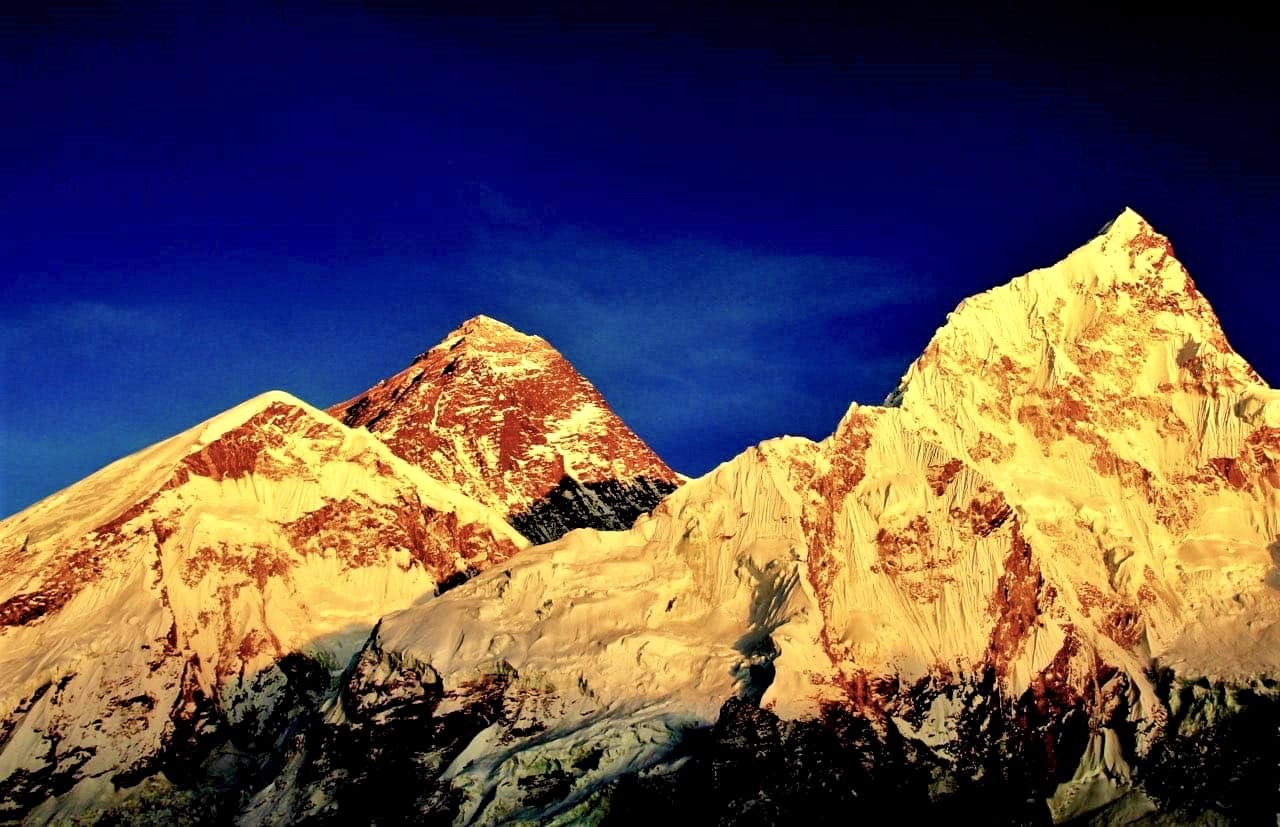
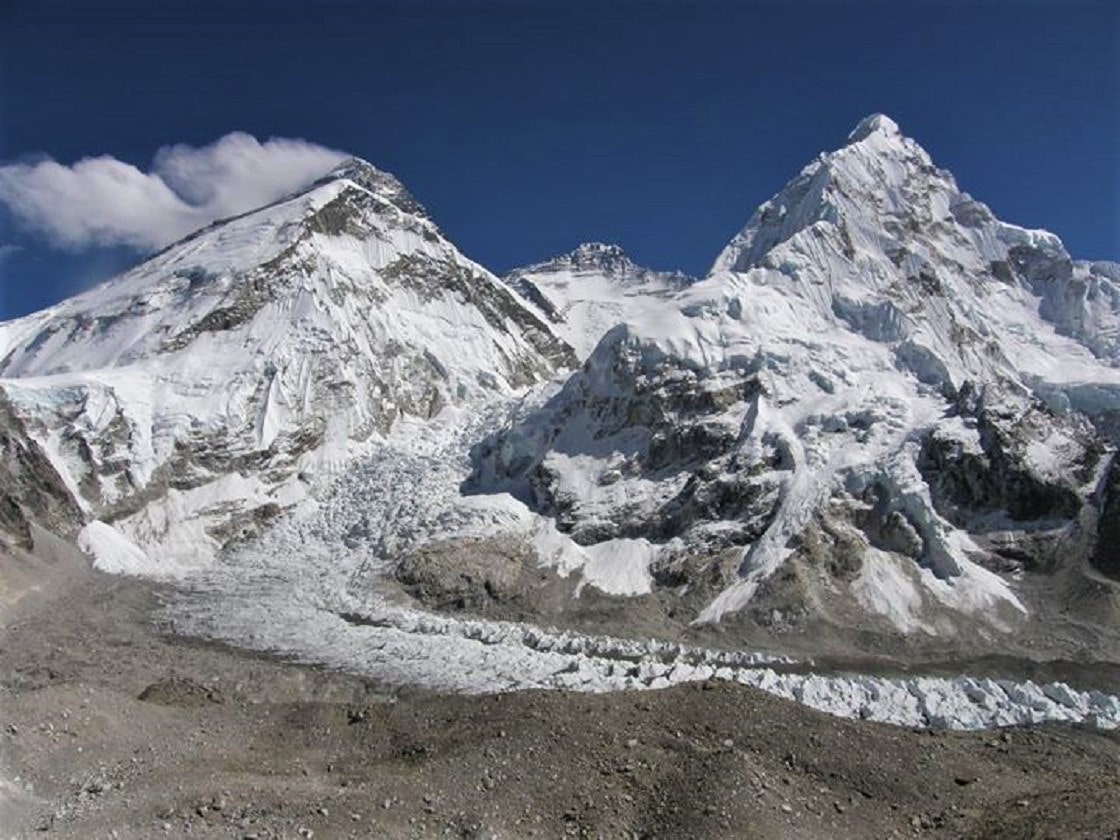
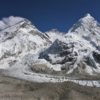
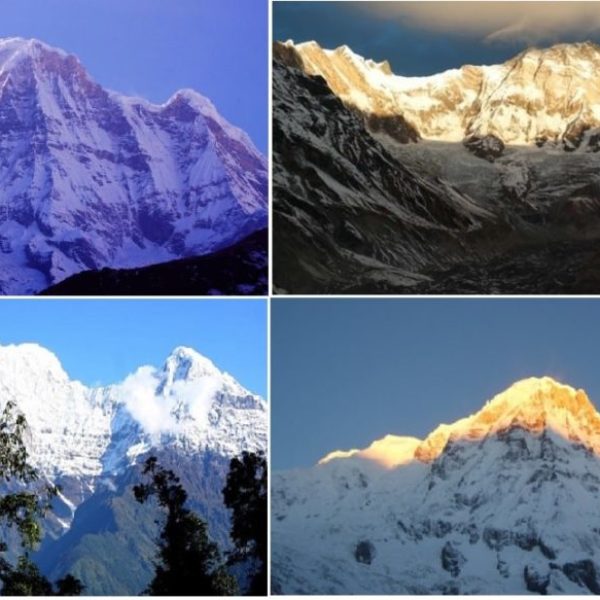
The Lhotse Expedition takes place in the eastern part of the Solukhumbu District in Nepal; from Lukla it takes around 5 days to reach Base Camp. At 8,516 m, Lhotse is the fourth-highest mountain in the world – after Mount Everest, K2 and Kangchenjunga – and the third-highest among Nepal’s highest mountains. Part of the Everest massif, Lhotse is connected to Everest via the South Col. “Lhotse” means “South Peak” in Tibetan. The mountain also comprises the smaller peaks Lhotse Middle (East) at 8,414 m and Lhotse Shar at 8,383 m; the main summit sits on the border between China/Tibet and Nepal’s Khumbu region. Climbing Lhotse is an excellent – and considerably more affordable – alternative to an Everest expedition.
The Lhotse route runs through the Khumbu Icefall and follows the same path as the standard Everest ascent up to a point above the so-called Yellow Band. Only then do the routes diverge: Everest teams head left of the South Col, while Lhotse climbers turn right.
Nepal Highlights:
Holiday season in Nepal. Additional info for the “Mount Lhotse Expedition, Lhotse Nepal”.
Nepal can be visited at any time of year. That said, a clear warning is due: there are some natural hazards, such as severe flooding during the monsoon season (mid-July to mid-August) and extreme cold in the Himalaya (late November to mid-December). Nepal has hills and mountains. The high mountains are one of the reasons why Nepal is so rich in water resources (fast-flowing rivers, beautiful lakes). Heavy or even moderate rainfall over 3-4 days can cause flooding in the lowland regions, so caution is needed when visiting those areas during the monsoon. Outside the monsoon, however, the sun shines during the day in the hilly regions even in winter, making for a warm, cosy and comfortable travel season.
Seasons in Nepal. Additional info for the “Mount Lhotse Expedition, Lhotse Nepal”.
Nepal has six seasons: Basanta Ritu (spring), Grishma Ritu (early summer), Barkha Ritu (summer monsoon), Sharad Ritu (early autumn), Hemanta Ritu (late autumn), and Shishir Ritu (winter).
Apart from the monsoon season (early July to late August), any season is suitable for a holiday. Yetiland-nepal.de advises against travelling in Nepal’s lowland regions during the monsoon.
Summers can be hot, with temperatures rising to around 25-40°C depending on location.
In the upper Himalayan region, summer temperatures can reach up to 30°C, while in the lower Terai region, mainly in the southern part of Nepal, they can even reach 40°C.
Winter days are mostly sunny, with cold mornings and evenings. If you have experienced winter in Greece, it feels somewhat similar to winter in the capital, Kathmandu. That comparison only goes so far, though: from mid-December the sun still shines and keeps you warm during the day, while evening temperatures can drop drastically to around 5°C – and considerably below 0°C in the Himalaya.
Buddha was born in Nepal. Additional info for the “Mount Lhotse Expedition, Lhotse Nepal”.
This topic has recently become a unique rallying point for all Nepalis. Because neighbouring countries, India in particular, sometimes publish claims that Buddha originated in India, the subject occasionally sparks controversy and strong feelings among Nepalis. In fact, Buddha was born in Nepal.
You should visit Lumbini, his birthplace in Nepal, south-west of the capital Kathmandu. The prince who left his palace in search of eternal peace and meaning in life attained Nirvana, or enlightenment. Since then, the path he set out – and which his followers have continued – has spread in various forms among millions of people around the world. Even in today’s modern world, and in Western society too, Buddhism and meditation (a path to self-knowledge, eternal peace, and ultimately Nirvana) have become popular, everyday practices.
Take a look at our other offers as well (which include a visit to Lumbini).
8 of the 10 tallest mountains in Nepal. Additional info for the “Mount Lhotse Expedition, Lhotse Nepal”.
Nepal contains 8 of the 10 highest mountains in the world. These are: Mount Everest (8,848 m), Kanchenjunga (8,586 m), Lhotse (8,516 m), Makalu (8,485 m), Cho Oyu (8,188 m), Dhaulagiri (8,167 m), Manaslu (8,163 m), and Annapurna I (8,091 m). Yetiland-Nepal offers the following categories in these regions: Category: Expedition for booking an expedition (suitable for professionals only). Category: Trek / Hike for trekking in the region (relatively easier, with views of the mountains from a lower altitude – suitable for people who want to get to know Nepal without climbing the mountains). Category: Holiday (purely to enjoy leisure activities and experience the nature and beauty of Nepal).
One of the most dangerous airports in Nepal. Additional info for the “Mount Lhotse Expedition, Lhotse Nepal”.
One of the most famous airports on the route to Mount Everest, “Lukla”, is considered one of the most dangerous airports in the world. It lies between the hills, which makes landing and take-off a serious challenge. Pilots say there is a point of no return, before which all prior precautions and technical orientation must be complete in order to bring the plane safely into the landing zone. In peak season, thousands of passengers fly into this region every month – a truly once-in-a-lifetime experience. Nepali pilots are highly skilled thanks to their experience across almost all of Nepal’s hilly regions.
New Year in Nepal. Additional info for the “Mount Lhotse Expedition, Lhotse Nepal”.
Nepal has its own calendar system, known as Vikram Sambat. The current year is 2077 (see date conversions for comparison). Nepali New Year falls around mid-April, which is also the start of summer in Nepal. People also follow the lunar calendar for religious processions, ceremonies, and family celebrations. Various old legends explain the origins of the New Year. Nepal is a country of many ethnic groups, and each has its own ancient history – so different local New Year dates exist as well. A well-known example is Losar, also followed by the Sherpas.
A unique flag. Additional info for the “Mount Lhotse Expedition, Lhotse Nepal”.
Nepal’s flag is unique in being the only double-triangular shape among all the flags of the world. It bears symbols of the sun and the moon, which reflect the character of the Nepali people. People are generally very welcoming to foreigners and show the utmost hospitality – in the hill regions, people even slaughter their own livestock (such as chickens or goats) to show hospitality to their guests. The moon on the flag reflects the modest character of the Nepalis, while the sun reflects their bravery. Even today, many Nepali soldiers serve in various British battalions around the world, known as the Gorkhas.
A unique weapon. Additional info for the “Mount Lhotse Expedition, Lhotse Nepal”.
A handmade metal knife that is very popular worldwide originates from Nepal. The “khukuri” is a knife carried by Nepali soldiers and used during the World Wars. According to World War veterans, Nepali soldiers were believed to have performed with great efficiency thanks to their bravery and use of the khukuri. You can also buy these knives as a souvenir.
Suspension bridges. Additional info for the “Mount Lhotse Expedition, Lhotse Nepal”.
Nepal is unique for its suspension bridges. Numerous suspension bridges span the gaps between hills. Since Nepal is such a hilly region, these bridges have long been a convenient way to make life easier for Nepalis living in high hill regions. Even Germany, which regards Nepal’s suspension bridges as a unique example, built its own suspension bridge in the Rhineland-Palatinate region – see the “Geierlay” suspension bridge.
Landslides. Additional info for the “Mount Lhotse Expedition, Lhotse Nepal”.
Nepal is a very hilly region. During the monsoon season, flooding is possible – mainly in Nepal’s flat lowland region known as the Terai, where vegetation thrives all year round. Nepal is rich in water resources, so large rivers with strong currents grow even larger with continuous rainfall. Heavy rain can sometimes also trigger landslides in Nepal’s hilly regions. It is recommended to avoid travelling during the monsoon season.
Earthquakes. Additional info for the “Mount Lhotse Expedition, Lhotse Nepal”.
Nepal is one of the countries at high risk of earthquakes. That does not mean major earthquakes happen every day or even every month, but past events have shown that a high earthquake risk recurs roughly every 50 years.
The reason for this earthquake risk lies in the tectonic plates beneath the country. The Indian Plate moves about 5 cm each year relative to the Eurasian Plate, which pushes the Himalaya upward – a process that takes millions of years. The earthquake of April 2015 is one of the most recent major earthquakes (magnitude 7.8, at a depth of 8.2 km) to cause major economic and geographic devastation in this Himalayan country. Around 9,000 people were killed and 22,000 injured in this earthquake.
Flying in Nepal. Additional info for the “Mount Lhotse Expedition, Lhotse Nepal”.
The Civil Aviation Authority of Nepal is the governing body responsible for regulating aviation in Nepal.
CAAN – NEPAL
Nepal is served by a number of different airlines, including:
Yeti Airlines, Buddha Air, Himalaya Airlines, Simrik Airlines, Nepal Airlines, Saurya Airlines, Shree Airlines, Sita Air, Summit Air, Tara Air.
You can also charter a helicopter for private use. Airlines offering such charter services include:
Air Dynasty, Simrik Air, Prabhu Helicopters, Altitude Air, Fishtail Air, Manang Air, Makalu Air, Kailash Helicopter Services, Heli Everest.
Airports in Nepal. Additional info for the “Mount Lhotse Expedition, Lhotse Nepal”.
A number of domestic airlines offer flight services all year round. Nepal covers an area of 147,516 km², about 880 km long (along the Himalayan axis) and 150-250 km wide (across). The average domestic flight duration is 1.5-2 hours, meaning you can fly between the following airports within a maximum of 3 flight hours: Tribhuvan International Airport, Kathmandu; Tenzing-Hillary Airport, Lukla; Pokhara Airport; Simara Airport; Bharatpur Airport; Biratnagar Airport; Surkhet Airport; Nepalgunj Airport; Jomsom Airport.
Of the airports listed above, Lukla Airport is one of the most dangerous airports in the world. It would be a truly fantastic, once-in-a-lifetime experience. Even so, thousands of people fly to and from this airport every month.
If Yetiland-Nepal has already offered you a complete package, there is no need to book anything further.
Keep in mind that during the winter season (November to December), early-morning flight delays are common due to heavy fog and poor visibility at the airports. There have been cases of people waiting for many hours only for the day’s flight to be cancelled anyway. For this reason, yetiland-nepal.de usually does not offer flights during this season, but tourist buses instead.
Similar offer to “Mount Lhotse Expedition, Lhotse Nepal”
Background info relevant to “Mount Lhotse Expedition, Lhotse Nepal”
Background info about “Mount Lhotse Expedition, Lhotse Nepal”
Reviews
There are no reviews yet.