


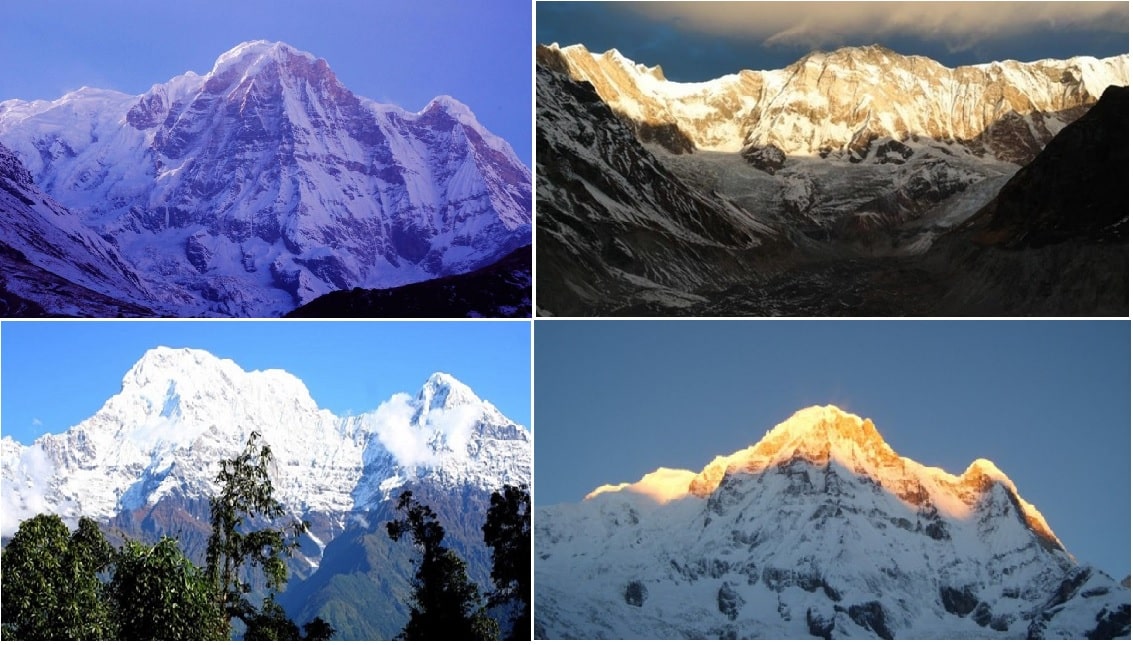
Description
Mount Annapurna I Expedition
- Day 01: Arrival in Kathmandu airport.
Transfer to request hotel accommodation for overnight. - Day 02: Kathmandu
Preparation, briefings, last minute shopping and permit formalities. - Day 03: Kathmandu – Pokhara
Drive from Kathmandu to Pokhara (950m/3,116ft) 6hrs.Lodge accommodation. - Day 04: Pokhara – Tatopani
Trek or Drive from Pokhara to Tatopani (1110m/3,641ft) 5 hrs.Lodge accommodation. - Day 05: Tatopani – Lete
Trek from Tatopani and Lete (2300m/7,546ft) 4 hrs. Lodge accommodation. - Day 06: Lete – Jungle camp
Trek from Lete to Jungle camp (2900m/9,515ft) Camping accommodation. - Day 07: Jungle camp – Miristi Khola
Trek from Jungle camp to Miristi Khola(4260m/13976ft) Campingaccommodation. - Day 08: Miristi Khola – Annapurna-BC
Trek from Miristi Khola to Annapurna-BC (4200m/13,780ft) Camping accommodation. - Day 9-38: Annapurna I Expedition / Climbing
Climb Annapurna I (8091m/26545ft.) - Day 39: Annapurna Base camp – Miristi Khola
Trek from Annapurna Base camp to Miristi Khola (4260m/13,976ft) Camping accommodation. - Day 40: Miristi Khola – Jungle camp
Trek from Miristi Khola to Jungle camp (2900m/9,515ft) Camping accommodation. - Day 42: Jungle camp – Lete
Trek Jungle camp to Lete (2300m/7,546ft) Camping accommodation. - Day 42: Lete – Tatopani
Drive from Lete to Tatopani (1110m/3,641ft) 5 hrs. Tea house accommodation. Explore natural hot spring. - Day 44: Tatopani – Beni – Kathmandu
Trek from Tatopani to Beni (830m/2723ft). Drive to Kathmandu (1350m/4,429ft) 10 hrs. Transportation provided by tourist mini bus. Request category hotel accommodation in Kathmandu. - Day 45: Kathmandu
Free and rest day at Kathmandu. Farewell celebration dinner with cultural program in the evening. - Day 46: See-Off
Transfer to Kathmandu airport for final departure.
What’s Included
Cost includes:
- All arrival and departure transfers to/from Kathmandu international airport plus other necessary transport per itinerary
- Assistance at Kathmandu international airport on arrival and departure
- 4 nights’ hotel accommodation in Kathmandu, bed and breakfast
- 1 night’s hotel accommodation in Pokhara, bed and breakfast
- Experienced, government-licensed trekking and climbing Sherpa guide throughout trekking and climbing
- An appropriate number of porters during the trekking period
- Land transport Kathmandu-Pokhara-Lete-Beni-Kathmandu for all climbing members, guide, liaison officer and kitchen staff
- Kitchen, storage, dining, guest and toilet tents, tables, chairs and cooking utensils for base camp
- Shared climbing equipment (rope, ice bars, ice screws, snow bars)
- 3 meals a day (breakfast, lunch and dinner with tea/coffee)
- Accommodation at hotel/lodge/guest house or tent camps during the trek
- Tented accommodation for members and staff during trekking and climbing (twin-sharing)
- Food and fuel for base camp and higher camps during the climbing period
- 50kg baggage allowance per person during the trek, carried by porters/mules
- Daily weather report from a specialised Seattle-based (US) weather service
- Cook and kitchen assistant at base camp
- Trekking permit (Annapurna Conservation Area entry fee)
- TIMS card
- Expedition royalty and government permit to climb Mt. Annapurna I
- One experienced, government-licensed, 3-time-summiteer climbing Sherpa per member
- Wages plus equipment, medical and accident insurance for all staff involved
- Helicopter rescue insurance for all expedition staff
- Medical consultation at base camp with the HRA clinic
- Equipment allowance and wages for climbing Sherpas, cook, kitchen assistant and liaison officer
- First-aid kit for the group and staff
- Satellite phone carried by the guide (available to clients at a per-minute charge)
- Appropriate high-altitude food for members and staff at base camp and above
- Required fixed and dynamic ropes during the climb
- Heater for the dining tent at base camp
- Emergency oxygen mask and regulator available on request, at extra charge
- Individual tent per member at Annapurna I advanced base camp
- Solar panel for lighting and charging electronics
- Tents for camp 1, 2 and 3, and icefall charges
- Gamow bags (portable hyperbaric chambers) for altitude sickness
- 2 bottles (8L) of Poisk oxygen per member
- Latest-model summit/top-out masks and regulators
- Sherpa tents, food and insurance
- Free cargo clearance and customs assistance
- Cooking gas and stove for camp 1, 3 and South Col
- Generator for base camp lighting backup
- Transport of food supplies from Kathmandu to base camp by porter/mule
- Our service charge and government taxes levied in Nepal
- Full pre-departure information, flight reconfirmation and visa-extension assistance
- Farewell dinner at a typical Nepali restaurant with a cultural show in Kathmandu
Cost excludes:
- Personal climbing gear and equipment
- Lunch and dinner in Kathmandu
- Extra nights in Kathmandu due to late departure or early return from the mountain
- Excess baggage charges above 30kg
- Personal communications (satellite phone, phone, fax, email)
- Personal climbing Sherpa (must be arranged before the expedition)
- Travel/rescue insurance
- Summit bonus for the climbing guide
- Any rescue costs or costs from early departure from the expedition
- Tips for staff and guide
Nepal Highlights:
Best time to visit Nepal – additional information on the “Mount Annapurna I Expedition”
Nepal can be visited all year round, but a few natural hazards are worth noting: heavy flooding during the monsoon (mid-July to mid-August) and extreme cold in the high Himalaya (late November to mid-December). Nepal is a land of hills and mountains, and its high peaks are one reason the country is so rich in water resources – fast-flowing rivers and beautiful lakes. Heavy rain, or even several days of light rain, can cause flooding in the lowland Terai region, so extra caution is advised there during the monsoon. Away from the monsoon, the hill regions enjoy sunny days even in winter, making for a pleasantly mild travel season.
Seasons in Nepal – additional information on the “Mount Annapurna I Expedition”
Nepal recognises six seasons: Basanta Ritu (spring), Grishma Ritu (early summer), Barkha Ritu (monsoon), Sharad Ritu (early autumn), Hemanta Ritu (late autumn) and Shishir Ritu (winter).
Outside the monsoon (early July to late August), any season is suitable for a trip – Yetiland-nepal.de advises against travelling in the Terai lowlands during the monsoon.
Summers can be hot, with temperatures ranging from around 25 to 40°C depending on location. In the upper Himalayan region, summer temperatures reach up to about 30°C, while the lower Terai plains in southern Nepal can see highs of 40°C or more.
Winter days are mostly sunny, with cold mornings and evenings. If you’ve experienced winter in Greece, the feeling in Kathmandu is similar – from mid-December the sun keeps days pleasantly warm, while evening temperatures can drop to around 5°C. In the high Himalaya, however, temperatures fall well below 0°C.
Buddha was born in Nepal – additional information on the “Mount Annapurna I Expedition”
This is a matter of pride for Nepalis: neighbouring countries, India in particular, sometimes claim Buddha’s origins lie there, which stirs up debate from time to time. In fact, Buddha was born in Nepal.
Well worth a visit is Lumbini, his birthplace southwest of Kathmandu. The prince who left his palace in search of lasting peace and meaning in life attained enlightenment (Nirvana) there. His teachings have since spread across the world and are followed by millions of people; in modern Western society too, Buddhism and meditation – a path to self-awareness and inner peace – have become popular everyday practices.
Take a look at our tours that include a visit to Lumbini.
8 of the world’s 10 highest mountains are in Nepal – additional information on the “Mount Annapurna I Expedition”
Nepal is home to 8 of the world’s 10 highest mountains: Mount Everest (8,848m), Kanchenjunga (8,586m), Lhotse (8,516m), Makalu (8,485m), Cho Oyu (8,188m), Dhaulagiri (8,167m), Manaslu (8,163m) and Annapurna I (8,091m). Yetiland-Nepal offers three categories of trip in these regions: Expedition – climbing an eight-thousander (for experienced professionals only); Trek – trekking through the same region at much lower altitude (ideal for those who want to experience Nepal’s mountains without climbing them); and Holiday – for enjoying Nepal’s nature, scenery and leisure activities.
One of the world’s most dangerous airports
Lukla Airport, the gateway to the Everest region, is considered one of the most dangerous airports in the world. Wedged between steep hills, it makes for a genuinely challenging landing and take-off. Pilots speak of a “point of no return”, beyond which all preparation and technical alignment must already be complete to bring the aircraft in safely. Thousands of passengers fly in during peak season each month – a truly unique experience. Thanks to their extensive experience across almost all of Nepal’s hill regions, Nepali pilots rank among the most skilled in the world.
New Year in Nepal – additional information on the “Mount Annapurna I Expedition”
Nepal follows its own calendar, the Vikram Sambat. Nepali New Year falls around mid-April, marking the start of the Nepali summer. People also follow the lunar calendar for religious festivals and family celebrations. As Nepal is home to many ethnic groups, each with its own history, several local New Year dates exist side by side – a well-known example is Losar, celebrated among others by the Sherpa community.
Nepal’s unique flag – additional information on the “Mount Annapurna I Expedition”
Nepal’s flag is the world’s only non-rectangular national flag, formed of two stacked triangles bearing the sun and the moon. These symbols reflect the character of the Nepali people: the moon for humility, the sun for courage. Nepalis are famed for their hospitality towards visitors – in the hill regions, hosts will traditionally slaughter their own livestock (such as chickens or goats) to honour guests. To this day, many Nepali soldiers, known as Gurkhas, serve in armies around the world.
A one-of-a-kind weapon
The handcrafted khukuri knife is world-famous and originates from Nepal. Carried by Nepali soldiers and used in both World Wars, it is credited in veterans’ accounts with contributing to the legendary fighting prowess of the Gurkha regiments. A khukuri also makes an excellent souvenir.
Suspension bridges – additional information on the “Mount Annapurna I Expedition”
Nepal is famous for its many suspension bridges spanning valleys between its hills, long a practical way of life for people in the mountainous regions. The idea even inspired Germany’s own Geierlay suspension bridge in Rhineland-Palatinate, built as a nod to Nepal’s example.
Landslides
As a very hilly country, Nepal is prone to flooding and landslides during the monsoon, especially in the lower-lying Terai region with its year-round vegetation. The combination of Nepal’s fast-flowing rivers and sustained monsoon rain can trigger landslides in the hill regions, so travel during the monsoon season is best avoided.
Earthquakes
Nepal sits in a zone of high seismic risk. This doesn’t mean major earthquakes happen constantly, but history shows a serious quake roughly every 50 years. The cause lies beneath the surface: the Indian Plate shifts about 5cm against the Eurasian Plate every year, gradually pushing the Himalaya upward over millions of years. The April 2015 earthquake (magnitude 7.8, at a depth of 8.2km) was one of the most recent major quakes, causing severe economic and geographic damage, killing around 9,000 people and injuring roughly 22,000.
Flying in Nepal
Nepal’s civil aviation is regulated by the Civil Aviation Authority of Nepal: CAAN – Nepal.
A number of airlines operate in Nepal, including Yeti Airlines, Buddha Air, Himalaya Airlines, Simrik Airlines, Nepal Airlines, Saurya Airlines, Shree Airlines, Sita Air, Summit Air and Tara Air.
Private helicopter charters are also available, including through Air Dynasty, Simrik Air, Prabhu Helicopters, Altitude Air, Fishtail Air, Manang Air, Makalu Air, Kailash Helicopter Services and Heli Everest.
Airports in Nepal
Numerous domestic airlines operate flights throughout the year. Nepal stretches roughly 880km along the Himalayan axis and 150–250km across, covering a total area of 147,516km². With an average domestic flight time of just 1.5–2 hours, all major airports are reachable within a maximum of 3 flying hours: Tribhuvan International Airport (Kathmandu), Tenzing-Hillary Airport (Lukla), Pokhara Airport, Simara Airport, Bharatpur Airport, Biratnagar Airport, Surkhet Airport, Nepalgunj Airport and Jomsom Airport.
Of these, Lukla Airport is considered one of the most dangerous in the world – a unique experience that thousands of travellers still make every month. When you book a complete package with Yetiland-Nepal, you don’t need to arrange any of this yourself.
Note that during winter (November to December), heavy morning fog often causes flight delays, and in some cases full-day cancellations after long waits. For this reason, Yetiland-nepal.de typically relies on tourist buses rather than domestic flights during this season.
Similar tour: Mount Baruntse Expedition
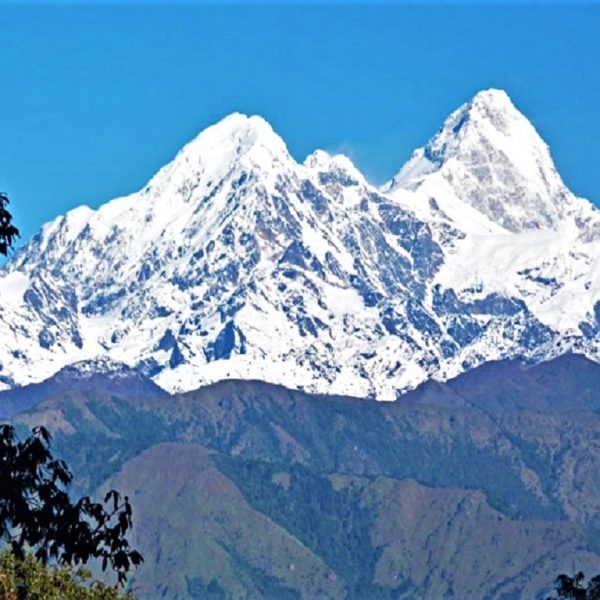
More background on Mount Annapurna I


Reviews
There are no reviews yet.