

Description
Mount Baruntse Expedition / Mt. Baruntse Expedition, Baruntse Nepal
- Day 1: Kathmandu Arrival
Arrival at Kathmandu Airport and transfer to hotel. - Day 2: Kathmandu
Sight-seeing of Kathmandu.
Full day’s sightseeing in Kathmandu valley. This include the Hindu temple complex at Pashupatinath (a UNESCO World Heritage Site) & the biggest Buddhist Stupa at Boudhanath. Also, visit Monkey Temple, Swyambhunath (2000 years old temple) and visit Patan city of fine arts. Return to the hotel. - Day 3: Kathmandu
Official preparation for climbing. - Day 4: Kathmandu – Lukla – Chutok
flight: Ktm-Lukla, continue trek to Chutok, overnight in camp. - Day 5: Chutok – Pangom
Chutok to Pangom, overnight in camp. - Day 6: Pangom – Kurke
Pangom to Kurke, overnight in camp. - Day 7: Kurke – Chetarawa
Kurke to Chetarawa, overnight in camp. - Day 8: Chetarawa – Tashing Dingma
Chetarawa to Tashing Dingma, overnight in camp. - Day 9: Tashing Dingma – Thangnang
Tashing Dingma to Thangnang, overnight in camp. - Day 10: Thangnag – Kharka
Thangnag to Kharka, overnight in camp. - Day 11: Kharka – Khong Dingman
Kharka to Khong Dingman, overnight in camp. - Day 12: Dingma – Chomlang Base Camp
Khong Dingma to Chomlang Base Camp. - Day 13: Chomlang Base Camp – Baruntse Base Camp
Chomlang Base Camp to Baruntse Base Camp. - Day 14-25: Expedition
The next 12 days (including this day) are for climbing or to say expedition.
Climbing period of Baruntse. - Day 26: Baruntse Base Camp – Amphu Captcha
Baruntse Base Camp to Amphu Captcha, overnight in camp. - Day 27: Amphu Captcha – Chhukung
Amphu Captcha to Chhukung, overnight in camp. - Day 28: Chhukung – Namche
Chhukung to Namche, overnight in a lodge. - Day 29: Namche to Lukla
Namche to Lukla, overnight in Hotel. - Day 30: Lukla-Ktm
Flight from Lukla-Ktm, transfer to hotel. - Day 31: Kathmandu
Kathmandu free day, evening culture show with Nepali dinner, hotel. - Day 32: See off and departure
Final departure, transfer to Airport.
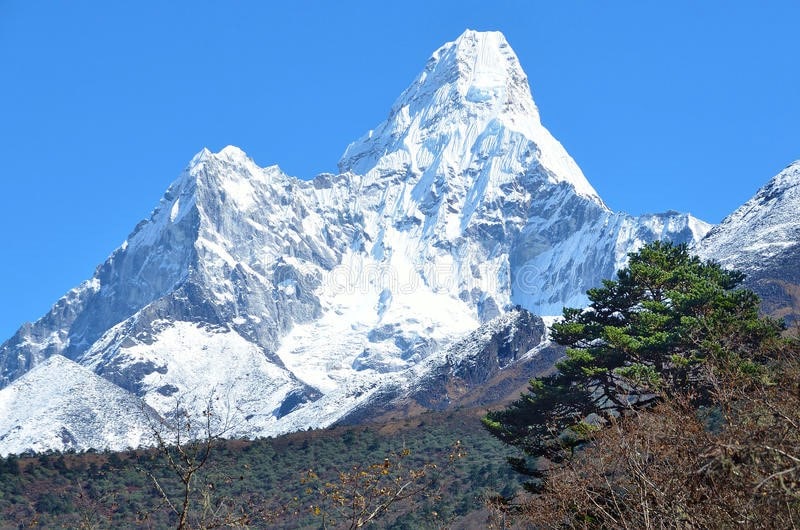
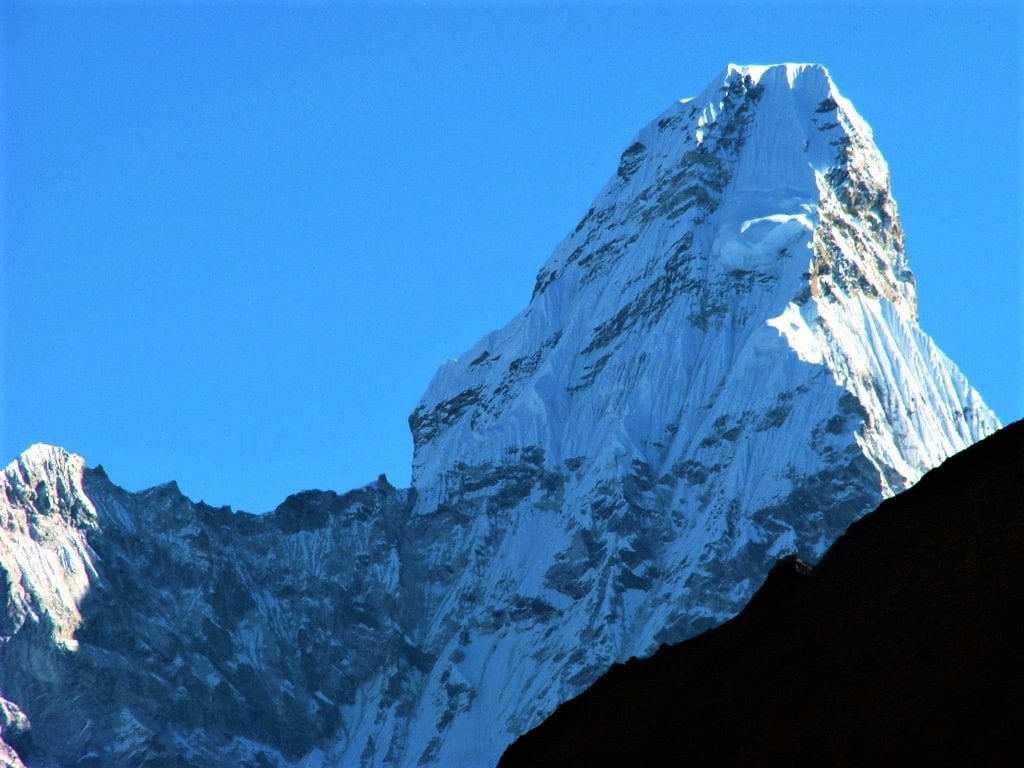
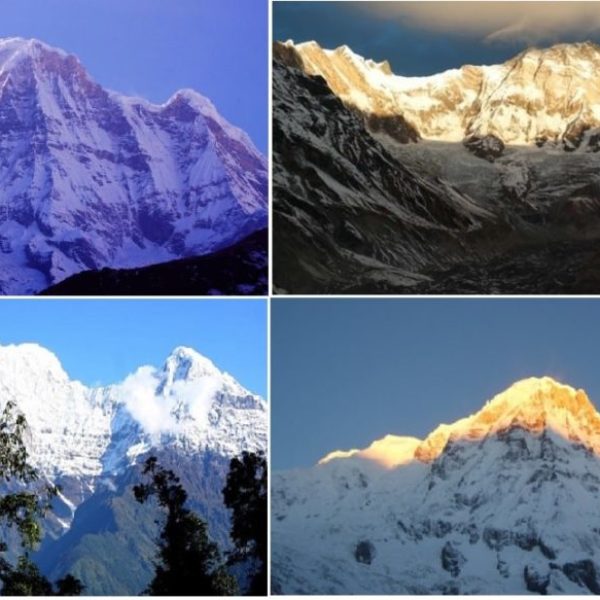
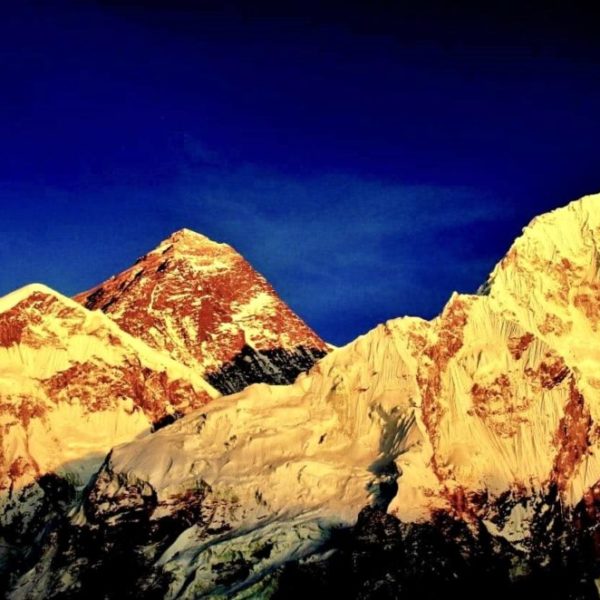
At 7,129 m, Mount Baruntse is one of the finest 7,000 m peaks in the Himalaya. Tucked between Mount Everest and Makalu, it stands majestically amid some of the highest peaks in the range – Makalu, Lhotse and Nuptse – offering a truly rewarding climb. Technically it is less demanding than neighbours such as Ama Dablam or Pumori, yet it still delivers a satisfying snow-and-ice climb with a few ice-cliff sections around 7,000 m. It was first climbed by Colin Todd and Geoff Harrow on 30 May 1954. The Baruntse expedition begins with a flight to Tumlingtar; after roughly 15 days on the trail you reach base camp, where you prepare and train before the summit push.
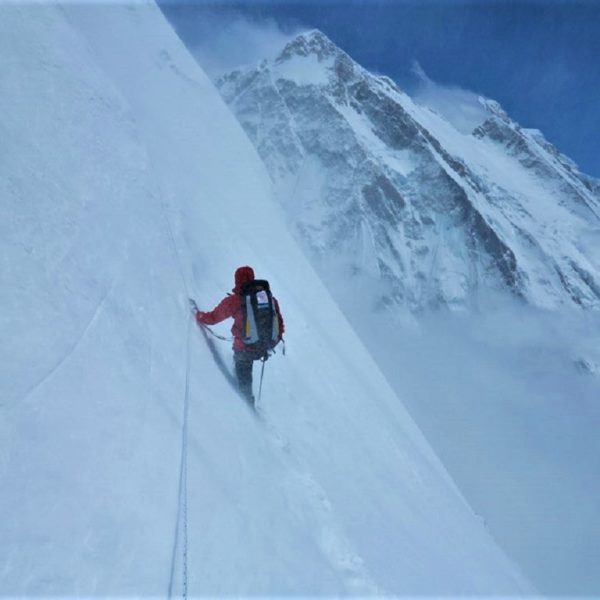
The south-east ridge is fairly demanding, being direct and, in places, tough going. After a successful summit, we cross the Amphu Lapcha pass into the upper Khumbu region, with the return trek passing through charming Sherpa villages. Mount Baruntse was one of the early Himalayan peaks identified by Edmund Hillary’s team as a climbing objective east of Everest.
The mountain combines many of the technical elements of an 8,000 m ascent, making it a popular training peak before attempting an eight-thousander. Steep 50-degree ice sections and a prominent ice cliff at around 7,000 m make the south-east ridge technically demanding. Our experienced guides and support crew will do everything they can to make this trip a lifelong memory.
Nepal Highlights:
Holiday season in Nepal. Additional information relevant to the “Mount Baruntse Expedition / Mt. Baruntse Expedition, Baruntse Nepal” expedition.
Nepal can be visited at any time of year. That said, a few natural hazards are worth flagging: heavy flooding during the monsoon (mid-July to mid-August) and extreme cold in the Himalaya (late November to mid-December). Nepal has both hills and high mountains, and it is those mountains that make the country so rich in water resources (fast-flowing rivers, beautiful lakes). Heavy or even moderate rain over 3-4 days can cause flooding in the lowland regions, so care is needed there during the monsoon. Away from the monsoon, the sun still shines during the day in the hill regions even in winter, which makes for a mild, comfortable travel season.
Seasons in Nepal. Additional information relevant to the “Mount Baruntse Expedition / Mt. Baruntse Expedition, Baruntse Nepal” expedition.
Nepal has six seasons: Basanta Ritu (spring), Grishma Ritu (early summer), Barkha Ritu (summer monsoon), Sharad Ritu (early autumn), Hemanta Ritu (late autumn) and Shishir Ritu (winter).
Aside from the monsoon (early July to late August), any season is suitable for a holiday. Yetiland-nepal.de advises against travelling in Nepal’s lowland regions during the monsoon.
Summer can get hot, with temperatures rising to roughly 25-40°C depending on location.
In the upper Himalayan region, summer temperatures can reach around 30°C, while in the lower Terai plains in southern Nepal they can climb to 40°C.
Winter days are mostly sunny, with cold mornings and evenings. If you have experienced winter in Greece, the winter feeling in the capital Kathmandu is somewhat similar – though not directly comparable: from mid-December the sun keeps daytime temperatures pleasant, evenings can drop to around 5°C, and up in the Himalaya it falls well below 0°C.
Buddha was born in Nepal. Additional information relevant to the “Mount Baruntse Expedition / Mt. Baruntse Expedition, Baruntse Nepal” expedition.
This topic has recently become something of a rallying point for Nepalis. Neighbouring countries, India in particular, sometimes claim that Buddha originated there, which occasionally causes controversy among Nepalis. In fact, Buddha was born in Nepal.
Well worth visiting is Lumbini, his birthplace in Nepal, south-west of the capital Kathmandu. The prince who left his palace in search of eternal peace and meaning in life ultimately found Nirvana, or enlightenment. Since then his path, followed by his descendants, has spread in many forms among millions of people around the world. Even in today’s modern world – including Western society – Buddhism and meditation (a path to self-knowledge, inner peace and ultimately Nirvana) have become popular, everyday practices.
Take a look at our other tours that include a visit to Lumbini.
8 of the 10 highest mountains in the world are in Nepal. Additional information relevant to the “Mount Baruntse Expedition / Mt. Baruntse Expedition, Baruntse Nepal” expedition.
Nepal contains 8 of the world’s 10 highest mountains: Mount Everest (8,848m), Kanchenjunga (8,586m), Lhotse (8,516m), Makalu (8,485m), Cho Oyu (8,188m), Dhaulagiri (8,167m), Manaslu (8,163m) and Annapurna I (8,091m). Yetiland-Nepal offers the following categories in these regions: Category: Expedition to book a mountaineering expedition (for experienced climbers only). Category: Trek for trekking in these regions (relatively easier, with views of the mountains from a much lower altitude – suited to travellers who want to experience Nepal without actually climbing). Category: Holiday (purely for leisure activities, to enjoy Nepal’s nature and beauty).
One of the most dangerous airports in the world
One of the best-known airports on the route to Mount Everest, Lukla, is considered one of the most challenging airports in the world to fly into. It sits wedged between hills, which makes landing and take-off a serious challenge. Pilots say there is a point of no return, before which all preparations and technical checks must be completed to bring the aircraft safely into land. In peak season, thousands of passengers fly into this region every month – a truly one-of-a-kind experience. Nepali pilots are highly skilled thanks to their extensive experience across almost all of Nepal’s hill and mountain regions.
New Year in Nepal. Additional information relevant to the “Mount Baruntse Expedition / Mt. Baruntse Expedition, Baruntse Nepal” expedition.
Nepal has its own calendar system, known as Vikram Sambat. It is currently the year 2077 (for comparison, see date conversions). Nepali New Year falls close to mid-April, which is also the start of summer in Nepal. People also follow the lunar calendar for religious processions, ceremonies and family celebrations. Various old legends explain the origin of the New Year. Nepal is home to many different ethnic groups, each with its own ancient history, so different local New Year dates also exist side by side – a well-known example being Losar, which the Sherpa community also follows.
A unique flag. Additional information relevant to the “Mount Baruntse Expedition / Mt. Baruntse Expedition, Baruntse Nepal” expedition.
Nepal’s flag is the only non-rectangular (in fact double-triangular) national flag in the world. It carries symbols of the sun and the moon, which echo the character of the Nepali people: mostly very welcoming towards foreigners and famous for their extreme hospitality. In the hill regions, people will even slaughter their own livestock (such as chickens or goats) to honour a guest. The moon on the flag reflects the modest character of the Nepali people, while the sun reflects their courage. To this day, many Nepali soldiers serve in various British Army battalions worldwide, known as the Gurkhas.
A unique weapon. Additional information relevant to the “Mount Baruntse Expedition / Mt. Baruntse Expedition, Baruntse Nepal” expedition.
A handcrafted metal knife that is famous worldwide originates from Nepal. The “khukuri” – the word resembles a knife – was carried by Nepali soldiers and used during the World Wars. According to accounts from war veterans, Nepali soldiers performed with great effectiveness thanks to their courage and their use of the khukuri. You can also buy these knives as a souvenir.
Suspension bridges
Nepal has its own kind of uniqueness in its suspension bridges. Countless suspension bridges span the gaps between hills. Since Nepal is such a hilly country, these bridges have long been a practical way to make life easier for people living in the high hill regions. Even Germany, taking inspiration from Nepal’s suspension bridges as a unique example, built one in Rhineland-Palatinate – see the “Geierlay” suspension bridge.
Landslides. Additional information relevant to the “Mount Baruntse Expedition / Mt. Baruntse Expedition, Baruntse Nepal” expedition.
Nepal is a very hilly country. During the monsoon there is a risk of flooding, mainly in Nepal’s flat lowland region known as the Terai, where vegetation thrives year-round. Nepal is rich in water resources, so a large, fast-flowing river swollen by continuous rainfall can grow even larger. Heavy rain in Nepal’s hill regions can sometimes also trigger landslides. We simply recommend avoiding travel in these regions during the monsoon.
Earthquakes. Additional information relevant to the “Mount Baruntse Expedition / Mt. Baruntse Expedition, Baruntse Nepal” expedition.
Nepal is one of the countries at high risk of earthquakes. This does not mean major earthquakes happen every day, or even every month, but past events show that a high risk of a serious earthquake recurs roughly every 50 years.
The earthquake risk comes from the tectonic plates beneath the country. The Indian Plate moves around 5cm per year relative to the Eurasian Plate, which is what continues to push the Himalaya upward – a process that takes place over millions of years. The April 2015 earthquake is one of the most recent major earthquakes (magnitude 7.8, at a depth of 8.2km) to cause major economic and geographic devastation in this Himalayan country. Around 9,000 people were killed and 22,000 injured in that earthquake.
Flying in Nepal. Additional information relevant to the “Mount Baruntse Expedition / Mt. Baruntse Expedition, Baruntse Nepal” expedition.
The Civil Aviation Authority of Nepal is the governing body responsible for regulating aviation in Nepal.
CAAN – NEPAL
Nepal is served by a number of domestic airlines, including:
Yeti Airlines, Buddha Air, Himalaya Airlines, Simrik Airlines, Nepal Airlines, Saurya Airlines, Shree Airlines, Sita Air, Summit Air, Tara Air.
You can also charter a helicopter for private use. Airlines offering such charter services include:
Air Dynasty, Simrik Air, Prabhu Helicopters, Altitude Air, Fishtail Air, Manang Air, Makalu Air, Kailash Helicopter Services, Heli Everest.
Airports in Nepal. Additional information relevant to the “Mount Baruntse Expedition / Mt. Baruntse Expedition, Baruntse Nepal” expedition.
A number of domestic airlines operate flight services year-round. Nepal covers an area of 147,516 km2, roughly 880km long (along the Himalayan axis) and 150-250km wide (across). The average domestic flight time is 1.5-2 hours, meaning you can reach any of the following airports within a maximum of 3 flight hours of each other: Tribhuvan International Airport (Kathmandu), Tenzing-Hillary Airport (Lukla), Pokhara Airport, Simara Airport, Bharatpur Airport, Biratnagar Airport, Surkhet Airport, Nepalgunj Airport and Jomsom Airport.
Of the airports listed above, Lukla Airport is one of the most dangerous in the world. Flying in is a genuinely unforgettable, once-in-a-lifetime experience – yet thousands of people fly to and from this airport every month.
If Yetiland-Nepal has arranged a complete package for you, there is nothing further you need to book yourself.
Keep in mind that in the winter season (November to December), morning flight delays are common due to heavy fog and poor visibility at the airports. Travellers sometimes have to wait for hours, only for the day’s flight to be cancelled after all. For this reason yetiland-nepal.de generally does not offer flights during this season, offering tourist buses instead.
Similar offer to “Mount Baruntse Expedition / Mt. Baruntse Expedition, Baruntse Nepal”
Background info on “Mount Baruntse Expedition / Mt. Baruntse Expedition, Baruntse Nepal”


Reviews
There are no reviews yet.