



Description
Mount Kanchenjunga Expedition (8,586 m)
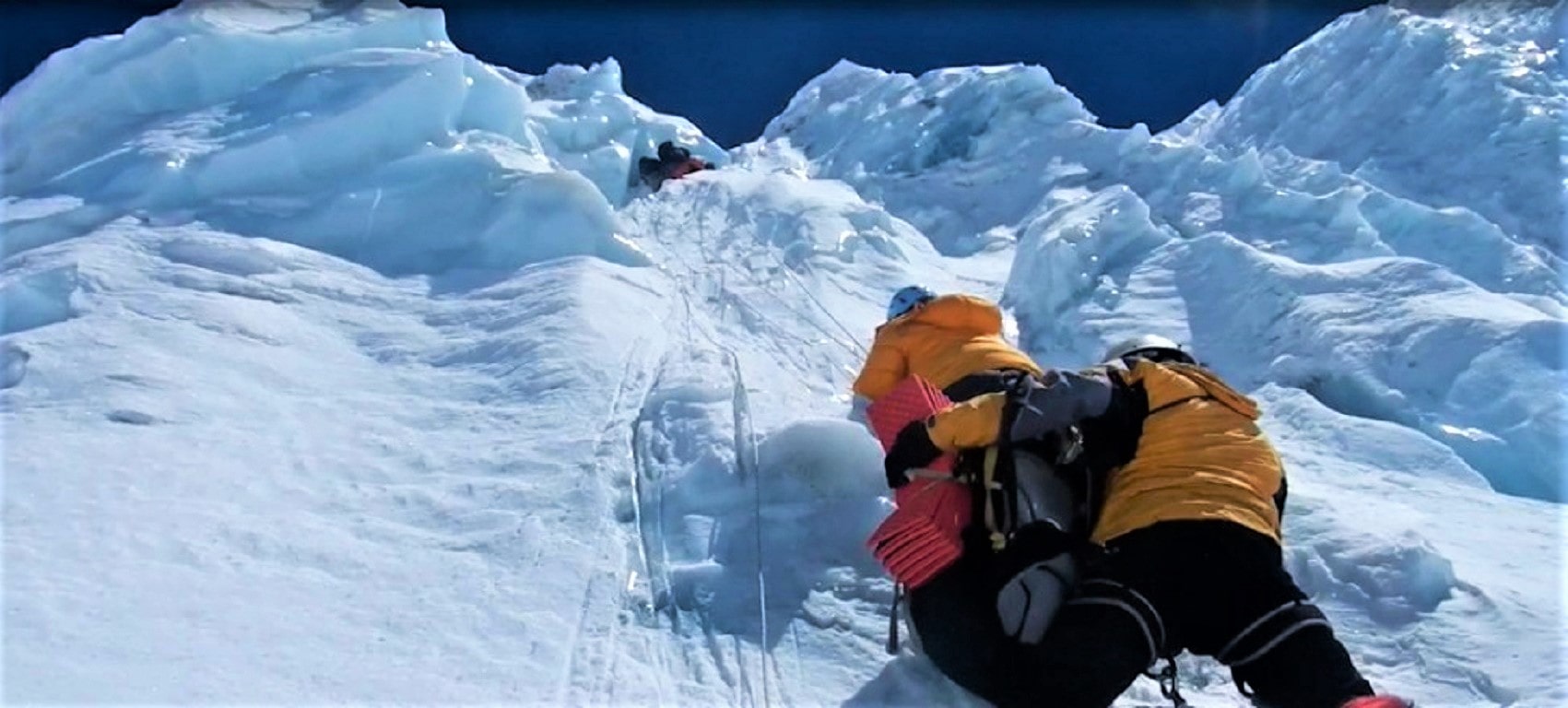
At 8,586 metres, Mount Kanchenjunga is the world’s third-highest mountain, after Mount Everest and K2. It rises in eastern Nepal, in Taplejung District. On 25 May 1955, British mountaineers George Band and Joe Brown became the first to reach its summit. The name “Kanchenjunga” translates as “Five Treasures of the Snows”, referring to its five peaks, four of which rise above 8,450 m: Kanchenjunga Main (8,586 m), Kanchenjunga West (8,505 m), Kanchenjunga South (8,494 m), Central (8,482 m) and Kangbachen (7,902 m). The five treasures symbolise gold, silver, gems, grain and sacred scriptures. Three of the five peaks sit directly on the border with India, and the remaining two in Nepal – making Kanchenjunga India’s highest mountain as well. The whole massif lies within the Kanchenjunga Conservation Area near Nepal’s eastern border and is considered sacred in the Kirat religion and by the Sherpa and Limbu peoples, whose name for it translates as “the mountain to which one offers greetings”.
Our Sherpa guides are government-certified and highly experienced, and will do everything in their power to bring you safely to the summit and back. Because we take no chances on an 8,000 m expedition, the itinerary builds in ample time for acclimatisation and for handling unforeseen circumstances along the way.
Itinerary
- Day 01: Arrive Kathmandu
Transfer to the hotel and welcome dinner in the evening. - Day 02-04: Kathmandu
Stay in Kathmandu for paperwork and other necessary preparations. - Day 05: Kathmandu – Bhadrapur – Phidim
Fly to Bhadrapur early morning and drive to Phidim. Overnight in a lodge. - Day 06: Phidim – Tharpu
Trek to Tharpu/Panchami. Overnight at camp. - Day 07: Tharpu – Doban
Trek to Doban. Overnight at camp. - Day 08: Doban – Khewang
Trek to Khewang. Overnight at camp. - Day 09: Khewang – Bhote Gaun
Trek to Yamphudin Bhote Gaun. Overnight at camp. - Day 10: Bhote Gaun – Toronto Forest Camp
Trek to Toronto Forest Camp. Overnight at camp. Some camps along Nepal’s trekking routes are jokingly named after well-known international cities. - Day 11: Toronto Forest Camp – Tseram
Trek to Tseram. Overnight at camp. - Day 12: Tseram – Ramje
Trek to Ramje. Overnight at camp. - Day 13: Ramje
Rest/acclimatisation day at Ramje. Overnight at camp. - Day 14: Ramje – Moraine
Trek to the moraine glacier camp. Overnight at camp. - Day 15: Moraine – Kuna Camp
Trek to Kuna Camp. Overnight at camp. - Day 16: Kuna Camp – Kanchenjunga Base Camp
Trek to Kanchenjunga Base Camp. Overnight at camp. - Day 17-20: Kanchenjunga Base Camp
These days are for acclimatising to the altitude and climate, and for the traditional blessing ceremony and final climbing preparations. - Day 21-55: Expedition/Climbing
Kanchenjunga climbing period. - Day 56: Kanchenjunga – Ramje
Return trek to Ramje. Overnight at camp. - Day 57: Ramje – Toronto Forest Camp
Trek down to Toronto Forest Camp. Overnight at camp. - Day 58: Toronto Forest Camp – Yamphudin Bhote Camp
Trek to Yamphudin Bhote Gaun. Overnight at camp. - Day 59: Yamphudin Bhote Camp – Khewang
Trek to Khewang. Overnight at camp. - Day 60: Khewang – Panchami
Trek to Panchami. Overnight at camp. - Day 61: Panchami – Tharpu
Trek to Tharpu. Overnight at camp. - Day 62: Tharpu – Bhadrapur
Drive from Tharpu to Bhadrapur. - Day 63: Bhadrapur – Kathmandu
Fly back to Kathmandu and transfer to the hotel. - Day 64-65: Kathmandu
Leisure time in Kathmandu. - Day 66: Departure
Departure to your home destination. This concludes the Mount Kanchenjunga Expedition.
Services
Cost includes:
- Mount Kanchenjunga climbing permit via the south route
- High-altitude food
- Private tent at base camp with mattress, plus toilet and shower tents at base camp
- All necessary camping and kitchen equipment
- All necessary climbing hardware, including fixed ropes
- Climbing Sherpa at a 1:2 ratio (a personal climbing Sherpa is available on request for an additional fee)
- Experienced cooks and kitchen staff at base camp and en route
- Experienced head Sirdar
- Base camp manager
- Government liaison officer fee
- Sufficient porters to carry expedition loads
- Truck transport for equipment
- Private bus/car transfers Bhadrapur – Phidim – Bhadrapur
- 6 nights’ hotel accommodation in Kathmandu in a 5-star hotel, twin sharing, breakfast included (four nights before and two nights after the expedition)
Cost excludes:
- Visa fee (approx. USD 100, valid for 90 days)
- International and domestic flights, transfers en route, and excess baggage
- Personal travel, medical, mountain rescue and repatriation insurance (required)
- Personal expenses
- Meals in Kathmandu
- Fees for electronic equipment (laptop, camera, satellite phone with global roaming SIM, etc.)
- Cost of emergency evacuation
Nepal Highlights
Best Time to Travel to Nepal
Nepal can be visited year-round, though two seasonal risks are worth knowing about: heavy flooding during the monsoon (mid-July to mid-August) and extreme cold in the high Himalaya (late November to mid-December). Nepal’s mountains are also the reason the country is so rich in water – powerful rivers and beautiful lakes are found throughout. Sustained or heavy rain can trigger flooding in the lowland regions, so extra caution is advised when travelling there during the monsoon. Outside the monsoon, the hill regions enjoy sunny days even in winter, making that season a comfortable time to travel.
The Seasons of Nepal
Nepal traditionally recognises six seasons: Basanta Ritu (spring), Grishma Ritu (early summer), Barkha Ritu (summer monsoon), Sharad Ritu (early autumn), Hemanta Ritu (late autumn) and Shishir Ritu (winter). Outside the monsoon (early July to late August), any season is suitable for travel; yetiland-nepal.de advises against visiting the lowland regions during the monsoon. Summer temperatures reach roughly 25-40°C depending on location – around 30°C in the upper Himalaya and up to 40°C in the southern Terai lowlands. Winter days are usually sunny with cold mornings and evenings: from mid-December, Kathmandu enjoys warm daytime sunshine while evening temperatures can drop to around 5°C, and considerably below freezing at altitude.
Buddha Was Born in Nepal
This is a point of pride for many Nepalis, since neighbouring countries – India in particular – sometimes claim Buddha as their own. In fact, Buddha was born in Lumbini, southwest of Kathmandu. The prince who left his palace in search of inner peace and meaning ultimately found enlightenment there. Millions around the world still follow his path today, and Buddhism and meditation have long since become popular practices for self-awareness and inner peace in Western society too. Take a look at our tours that include a visit to Lumbini.
8 of the World’s 10 Highest Mountains
Nepal is home to 8 of the world’s 10 highest mountains: Mount Everest (8,848 m), Kanchenjunga (8,586 m), Lhotse (8,516 m), Makalu (8,485 m), Cho Oyu (8,188 m), Dhaulagiri (8,167 m), Manaslu (8,163 m) and Annapurna I (8,091 m). Yetiland-Nepal offers three types of trips in these regions: Expedition (summit climbs, for experienced mountaineers only), Trek (an easier way to see the mountains from lower altitude – ideal for getting to know Nepal without technical climbing) and Holiday (leisure travel to enjoy nature and scenery without a sporting challenge).
One of the World’s Most Dangerous Airports
Lukla airport, the gateway to the Everest region, is considered one of the most dangerous airports in the world: wedged between steep mountainsides, it makes for a genuinely challenging take-off and landing. Pilots speak of a “point of no return”, beyond which every precaution must already be in place to bring the aircraft in safely. Even so, thousands of passengers fly in and out of Lukla every month during peak season – a once-in-a-lifetime experience skilfully handled by Nepal’s highly experienced pilots.
New Year in Nepal
Nepal follows its own calendar, the Vikram Sambat. Nepali New Year falls around mid-April, at the start of the Nepali summer. Religious festivals and family celebrations also follow the lunar calendar. Because Nepal is home to many different ethnic groups, each with its own history, several local New Year dates exist side by side – Losar, celebrated among others by the Sherpa community, is a well-known example.
A Truly Unique National Flag
Nepal’s flag is the only non-rectangular national flag in the world – two stacked triangular pennants bearing the sun and the moon. Both symbolise the character of the Nepali people: the moon for modesty, the sun for courage. Nepalis are famously hospitable – in the hill regions, hosts will sometimes slaughter livestock such as a chicken or goat purely to honour a guest. To this day, Nepali soldiers, known as Gurkhas, serve in armed forces around the world.
The Khukuri – a Unique Weapon
The handcrafted “khukuri” knife originates in Nepal and is famous worldwide. Carried by Gurkha soldiers, it saw service in both World Wars, and according to veterans’ accounts, the soldiers’ courage and skill with the khukuri contributed significantly to their reputation on the battlefield. Today it also makes a popular souvenir.
Suspension Bridges
Nepal is famous for its many suspension bridges spanning valleys and hillsides – a practical solution that has long made life easier in the hill regions. Germany even took inspiration from this: the Geierlay suspension bridge in Rhineland-Palatinate was modelled on this Nepali design.
Landslides
As a very hilly country, Nepal is prone to flooding during the monsoon, especially in the flat Terai lowlands. Heavy rainfall combined with the country’s extensive river network can also trigger landslides in the hill regions – another good reason to plan travel to these areas outside the monsoon season.
Earthquakes
Nepal lies in a high-risk earthquake zone, as the Indian tectonic plate pushes roughly 5 cm further beneath the Eurasian plate every year, gradually thrusting the Himalaya upward – a process spanning millions of years. Historically, major earthquakes have struck roughly every 50 years. The April 2015 earthquake (magnitude 7.8, 8.2 km depth) is among the most recent major events, claiming around 9,000 lives and injuring 22,000 people.
Flying in Nepal
Nepal’s civil aviation authority, CAAN Nepal, regulates air traffic in the country. Several airlines operate domestic routes: Yeti Airlines, Buddha Air, Himalaya Airlines, Simrik Airlines, Nepal Airlines, Saurya Airlines, Shree Airlines, Sita Air, Summit Air and Tara Air. Private helicopter charters are available through operators including Air Dynasty, Simrik Air, Prabhu Helicopters, Altitude Air, Fishtail Air, Manang Air, Makalu Air, Kailash Helicopter Services and Heli Everest.
Airports in Nepal
Nepal covers around 147,516 km², stretching roughly 880 km along the Himalayan range and 150-250 km across. With average domestic flight times of 1.5-2 hours, every major airport in the country lies within about 3 flying hours of one another: Tribhuvan International Airport (Kathmandu), Tenzing-Hillary Airport (Lukla), Pokhara, Simara, Bharatpur, Biratnagar, Surkhet, Nepalgunj and Jomsom. As mentioned, Lukla is considered one of the most dangerous airports in the world – a once-in-a-lifetime experience for the thousands of travellers who pass through it each month. If you have already booked a complete package with Yetiland-Nepal, there is nothing further to arrange. In winter (November/December), thick early-morning fog often causes flight delays or cancellations, which is why yetiland-nepal.de generally relies on tourist buses rather than domestic flights during this season.
Similar tour: Mustang Valley
Similar tour: Mount South Annapurna
More background on Mount Kanchenjunga (Wikipedia)



Reviews
There are no reviews yet.